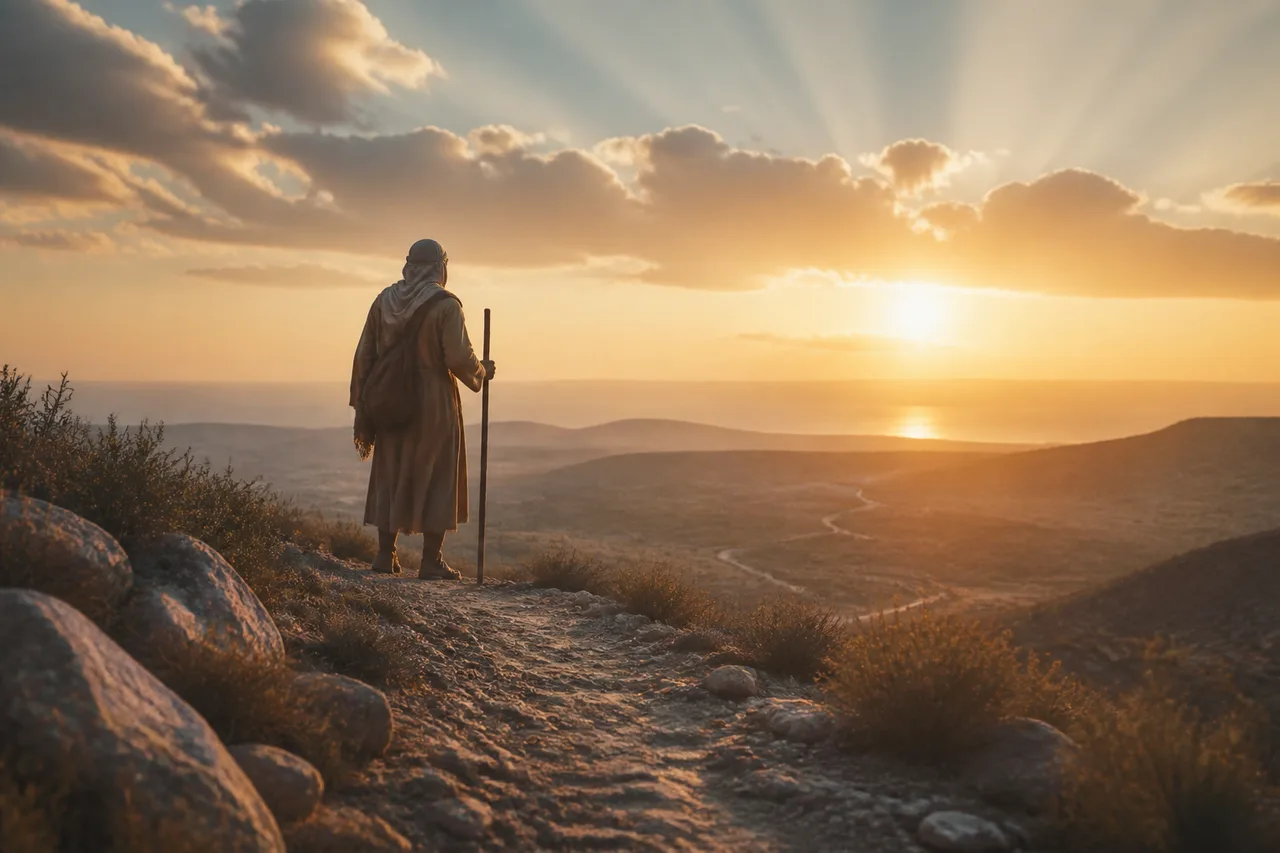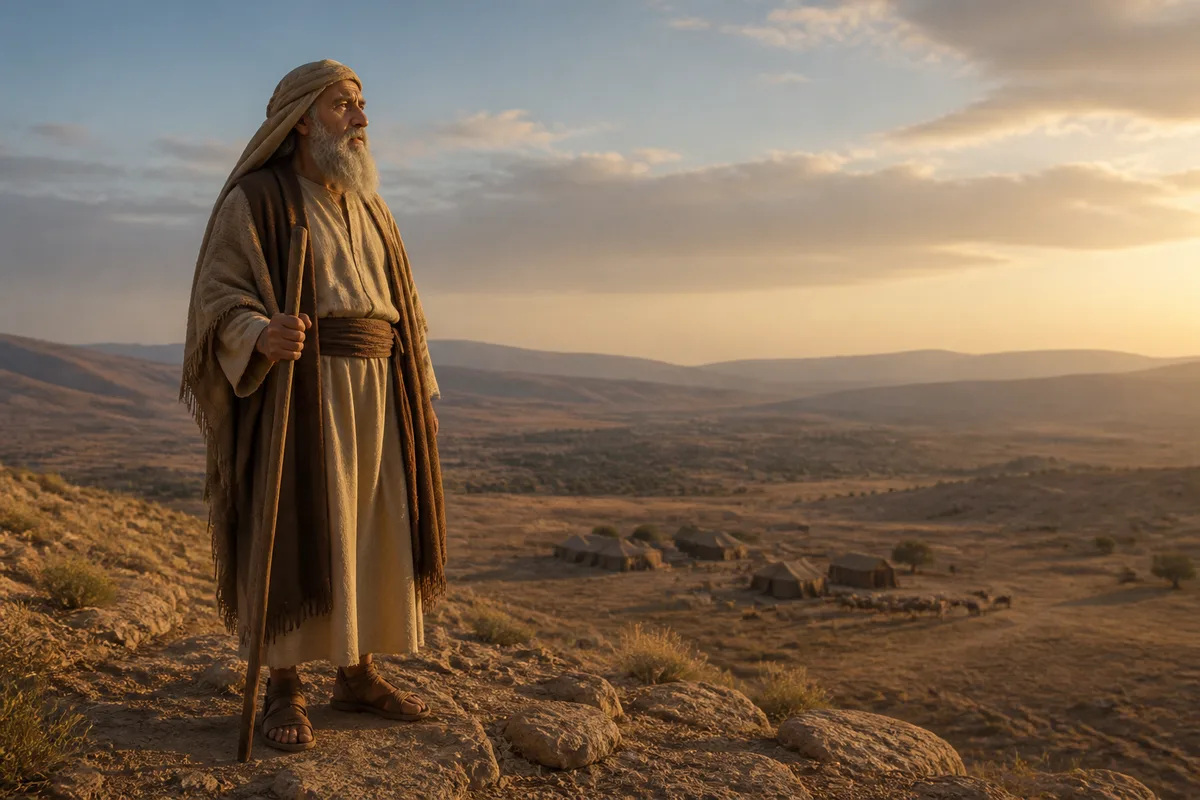
Abraham was the patriarch whom God called to leave his country and family household for a land God would show him. God promised to make him a great nation, bless all families of the earth through him, and give descendants and land. His story, mainly in Genesis 12–25, is a journey of real faith mixed with fear, delay, poor decisions, and grace.
Abraham was first called Abram. God later changed his name to Abraham, meaning “father of a multitude.” He is central to the biblical story and is honored in Judaism, Christianity, and Islam.
The call of Abram
Abram’s family came from Ur of the Chaldeans and settled in Haran. Genesis 12 records God telling him to leave his country, relatives, and father’s house for an unnamed land.
God promised, “I will make of you a great nation. I will bless you… and all the families of the earth will be blessed in you.” Abram went, taking his wife Sarai, his nephew Lot, their possessions, and members of their household.
He was seventy-five years old according to Genesis. The call required movement before he knew the full route. Hebrews 11 later presents this as an example of faith: he went out without knowing where he was going.
The promise was never only private prosperity. From the beginning, Abraham’s blessing was meant to reach “all the families of the earth.” The biblical story eventually connects that worldwide blessing with Jesus Christ.
Fear in Egypt
Soon after Abram entered Canaan, famine drove him to Egypt. Afraid that Egyptians would kill him to take Sarai, he asked her to say she was his sister.
Sarai was taken into Pharaoh’s household. God afflicted Pharaoh’s house, the deception was uncovered, and Pharaoh sent them away.
The account does not hide Abram’s failure. The man who trusted God enough to leave home also acted from fear and placed Sarai at risk. Genesis later records a similar incident with Abimelech.
Scripture’s honesty matters. Abraham is not presented as naturally fearless or morally perfect. God’s promise continues because of divine faithfulness, not because Abraham earns it through flawless behavior.
Separation from Lot
Abram and Lot became wealthy enough that the land could not support both households together. Conflict arose between their herdsmen.
Abram offered Lot the first choice of land. Lot selected the well-watered Jordan plain near Sodom, while Abram remained in Canaan. God then repeated the promise of land and descendants.
Later, when Lot was captured during a regional war, Abram gathered trained men from his household, rescued him, and refused enrichment from the king of Sodom.
These chapters show generosity and courage. Abraham did not treat Lot’s earlier choice as a reason to abandon him.
Covenant and counted righteousness
Years passed, and Abram remained childless. He asked God how the promise could be fulfilled. God brought him outside and told him to look at the stars: “So your offspring will be.”
Genesis 15:6 says Abram believed the Lord, and God counted it to him as righteousness. Paul draws on this verse in Romans 4 to explain justification by faith rather than works.
God also made a covenant, a binding commitment, with Abram. In the ancient ceremony described in Genesis 15, God symbolically passed between divided animals while Abram was in a deep sleep. The scene emphasizes God taking responsibility for the promise.
Faith here does not mean Abram never asks questions. He asks how he will know and struggles with the long delay. Biblical faith can seek understanding while resting on God’s word.
Hagar and Ishmael
Sarai remained unable to bear children. She gave her Egyptian servant Hagar to Abram so that a child might be obtained through her, an arrangement known in the ancient world but marked in Genesis by inequality and suffering.
Hagar conceived, conflict followed, and Sarai treated her harshly. Hagar fled. God met her in the wilderness, heard her affliction, and promised a future for her son Ishmael.
Later, after Isaac’s birth, Hagar and Ishmael were sent away. God again heard the boy and provided water.
These events should not be softened into a harmless detour. Human attempts to secure the promise brought pain, especially to a servant with less power. Yet God saw Hagar, cared for Ishmael, and did not allow Abraham’s family story to make them invisible.
New names and the sign of covenant
In Genesis 17, God changed Abram’s name to Abraham and Sarai’s to Sarah. He promised that Sarah herself would bear the covenant son.
Circumcision was given as the sign of the covenant for Abraham’s household. God also affirmed that Ishmael would be blessed and become a great nation, while the covenant line would continue through Isaac.
Abraham laughed at the idea of a son being born to him and Sarah in old age. In the next chapter Sarah also laughed. Isaac’s name is connected with laughter, turning disbelief and surprise into part of the child’s identity.
Hospitality and intercession
Genesis 18 describes Abraham welcoming three visitors with water, rest, and a generous meal. The encounter includes another announcement of Isaac’s birth.
The chapter then turns toward Sodom. Abraham interceded, asking whether the Judge of all the earth would destroy the righteous with the wicked. He repeatedly asked whether the city would be spared for a decreasing number of righteous people.
His prayer combines boldness and humility. He appeals to God’s justice while remembering he is “dust and ashes.” The following chapter records Sodom’s destruction and Lot’s rescue.
Isaac and the difficult test
Sarah gave birth to Isaac as God had promised. Genesis 22 later records God testing Abraham by commanding him to offer Isaac.
The passage is difficult and should not be used to justify violence or any claim that God privately commands someone to harm a child. Within Genesis, the test ends with God stopping Abraham and providing a ram. The narrative distinguishes Israel’s God from surrounding practices of child sacrifice and reaffirms that the promised son is received from God.
Hebrews 11 interprets Abraham’s action as faith that God could raise the dead. Christians have also seen the provided sacrifice and beloved son as themes that point forward to Christ, while recognizing important differences: God stops Abraham’s hand, whereas God Himself bears the cost in the gospel.
Sarah’s death and Abraham’s final years
Sarah died at Hebron. Abraham mourned and purchased the cave of Machpelah as a burial place. The negotiation gave his family its first legally held property in the promised land.
Abraham later arranged for Isaac to marry Rebekah. He had other children with Keturah and provided for them while identifying Isaac as the covenant heir. Abraham died at 175, and Isaac and Ishmael buried him beside Sarah.
The reunion of the two sons at the burial is stated simply. Scripture does not tell us the details of their relationship at that moment.
What we can learn from Abraham
Abraham’s life shows faith as a long journey, not one heroic moment. He obeyed, doubted, worshiped, acted from fear, waited, interceded, and learned.
The story warns against trying to force God’s promise through harmful human arrangements. Impatience can wound people with less power. God’s faithfulness never excuses Abraham’s failures.
His life also shows that questions are not automatically unbelief. Abraham spoke honestly with God, and the covenant rested on God’s commitment.
Most importantly, Abraham’s story points beyond Abraham. Paul says the promise anticipated blessing for the nations, and those who share Abraham’s faith are included in God’s family through Christ.
Where Abraham appears in the Bible
Abraham’s main story runs from Genesis 11:26 through 25:11. He is repeatedly mentioned throughout Scripture. Key interpretations appear in Nehemiah 9, Isaiah 51, Matthew 1, John 8, Romans 4, Galatians 3–4, Hebrews 6–7 and 11, and James 2.
Frequently asked questions
Were Abram and Abraham different people?
No. God changed Abram’s name to Abraham in Genesis 17 as part of the covenant promise that he would become father of many nations.
How old was Abraham when Isaac was born?
Genesis 21:5 says Abraham was one hundred years old.
Why is Abraham called the father of faith?
He trusted God’s promise, and Genesis 15:6 says his faith was counted as righteousness. Romans 4 presents him as father of all who believe.
Was Abraham perfect?
No. Genesis records fear, deception, and decisions that harmed others. His importance rests on God’s grace and promise, not moral perfection.