Galatians 5 describes the fruit of the Spirit as love, joy, peace, patience, kindness, goodness, faithfulness, gentleness, and self-control. These are not nine techniques for earning God’s acceptance. They are qualities the Holy Spirit forms as believers live in the freedom of Christ and learn to serve one another through love.
Understanding the chapter’s conflict about grace, law, flesh, and freedom keeps the list from becoming a motivational checklist.
The setting of Galatians
Paul wrote to churches in Galatia that were being pressured to require Gentile believers to accept circumcision and law observance as necessary for full belonging among God’s people.
The letter strongly defends justification by faith in Christ. To be justified means to be declared right before God. Paul argues that this status is received through Christ, not earned through “works of the law.”
This raises an obvious question: if Christians are free from using the law to secure justification, does freedom mean they can live selfishly? Galatians 5 answers no. Grace frees people for love, not for harm.
Freedom that serves — Galatians 5:1, 13–15
Paul begins, “Stand firm therefore in the liberty by which Christ has made us free.” The immediate danger is returning to a system in which circumcision becomes an obligation tied to justification.
Later he says, “You, brothers, were called for freedom. Only don’t use your freedom for gain to the flesh, but through love be servants to one another.”
Christian freedom is not unrestricted appetite. It is release from condemnation and self-justification so that people can love. Paul summarizes the law’s neighbor-directed purpose: “You shall love your neighbor as yourself.”
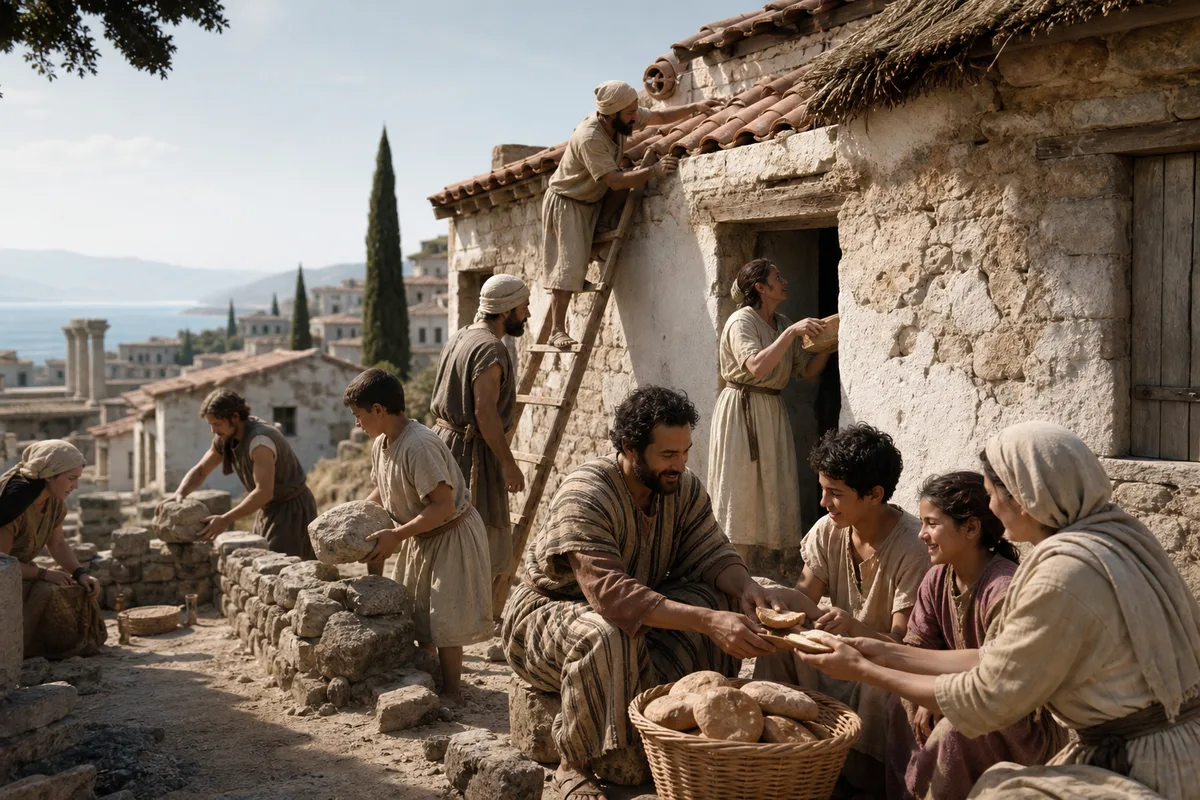
The churches were biting and devouring one another. Theological confusion had become relational harm. Any interpretation of spiritual fruit must therefore be tested in community, not merely private feelings.
Walking by the Spirit — Galatians 5:16–18
“Walk by the Spirit” describes an ongoing way of life under the Spirit’s direction and power. Walking is repeated, ordinary movement—not one dramatic spiritual experience.
Paul contrasts the Spirit with “the flesh.” In this context, flesh does not simply mean the physical body. It refers to fallen human life organized in resistance to God. The body itself can serve God; the problem is sin’s rule.
The desires of flesh and Spirit oppose each other. Christian growth therefore includes conflict. The presence of struggle does not prove the Spirit is absent. Believers learn to refuse harmful desire and follow the Spirit.
Being “led by the Spirit” means life is not controlled by the law as a system of condemnation. It does not mean every impulse should be labeled divine guidance. The Spirit produces a recognizable Christlike character.
The works of the flesh — Galatians 5:19–21
Before listing the fruit, Paul names works that grow from the flesh: sexual immorality, idolatry, sorcery, hatred, strife, jealousy, outbursts of anger, selfish ambition, divisions, envy, drunkenness, and related acts.
The list includes private behavior and community-destroying attitudes. Religious division, envy, and uncontrolled anger stand beside sins people may consider more dramatic.
Paul warns that those who practice such things will not inherit God’s kingdom. He is describing a settled way of life, not teaching that one failure places a repentant believer beyond grace. Galatians itself calls for gentle restoration when someone is overtaken in a fault.
The contrast prepares readers to see spiritual fruit as concrete evidence of a different kind of life.
One fruit, nine qualities — Galatians 5:22–23
Paul uses the singular “fruit,” followed by nine qualities. The singular may emphasize the unified result of the Spirit’s work rather than nine independent gifts from which people choose favorites.
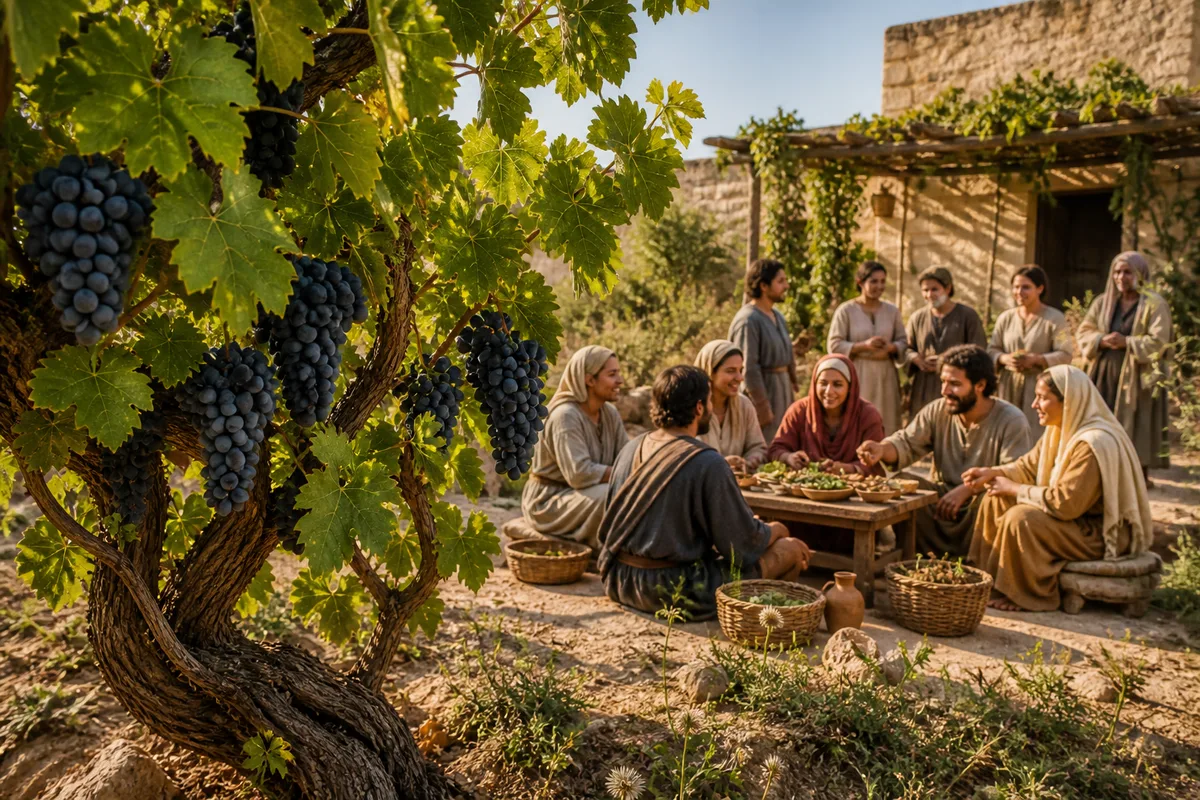
Fruit grows organically, but not effortlessly. A branch receives life from the vine while also being pruned. In John 15, Jesus connects abiding in Him with bearing fruit and loving one another.
These qualities are not personality types. A quiet temperament is not automatically gentleness, and an outgoing person is not automatically joyful. The Spirit shapes different personalities toward the character of Christ.
Love
Love seeks another person’s true good. In Galatians 5 it is the purpose of freedom and the fulfillment of the command toward neighbor.
Biblical love can be tender and firm. It does not approve abuse, erase justice, or avoid every difficult conversation. It serves without using people and tells truth without delighting in harm.
Love comes first because the remaining qualities take shape within it. Patience without love can become mere tolerance; self-control without love can become cold pride.
Joy
Joy is gladness rooted in God and His saving work. It is not constant cheerfulness or denial of grief. Paul writes elsewhere of being sorrowful yet always rejoicing.
Spiritual joy can coexist with tears because its foundation is deeper than the day’s mood. It receives good gifts gratefully and holds hope in Christ during difficulty.
Joy should never be demanded as a performance from someone in acute grief. The church can carry hope patiently when a hurting person cannot feel it.
Peace
Peace includes reconciliation with God through Christ and a way of relating that refuses needless hostility. In Galatians, where churches were divided, peace has a communal edge.
Peace is not avoiding conflict at any price. Sometimes truth must be spoken and protection sought. The peaceful person aims at justice and restoration without feeding revenge.
Inner calm may be part of peace, but the fruit is larger than a feeling.
Patience
Patience is long-suffering—the capacity to endure difficulty and other people’s failures without quick retaliation.
It does not require remaining indefinitely in danger or enabling destructive behavior. God’s patience leads toward repentance; it is not indifference to harm.
Patience grows in delayed answers, repeated responsibilities, and relationships where change is slow. It often looks less impressive than we expect.
Kindness and goodness
Kindness is gracious usefulness toward another person. Goodness is moral generosity and action consistent with what is right.
Both become visible. A kind intention becomes a meal, a careful answer, shared time, or practical help. Goodness may also require refusing corruption and protecting someone vulnerable.
The Spirit does not form merely “nice” people who never disrupt wrongdoing. Jesus was compassionate and also confronted hypocrisy.
Faithfulness
The Greek word can mean faith or faithfulness; in this list, reliability and fidelity are usually emphasized. A faithful person keeps commitments, tells the truth, and can be trusted.
Faithfulness is built through ordinary repeated choices. It includes admitting when a promise cannot be kept and making repairs after failure.
It reflects the God who remains faithful even when His people are inconsistent.
Gentleness
Gentleness is strength governed for another person’s good. It is not weakness or fear of speaking.
Galatians 6 says a person caught in sin should be restored in a spirit of gentleness while helpers watch themselves. Correction can therefore be gentle: truthful, humble, and aimed at restoration rather than humiliation.
Jesus describes Himself as gentle and humble in heart while also acting courageously.
Self-control
Self-control is Spirit-enabled mastery of desires rather than slavery to them. It touches speech, sexuality, anger, consumption, time, and power.
It is not self-salvation by willpower. The Spirit’s work does not remove human choices; it enables a new way of making them.
Self-control also knows when to seek help. Addiction, compulsive behavior, or uncontrolled anger may require pastoral, medical, therapeutic, and community support.
“Against such things there is no law”
No law condemns this fruit. These qualities fulfill what God’s law was aiming toward in love of neighbor.
Paul then says those who belong to Christ have crucified the flesh with its passions and desires. This connects Christian ethics to union with Jesus’ death. The old rule has been decisively judged, though believers still must “keep in step with the Spirit.”
Keeping in step suggests responsive, ongoing movement. Growth is not instant perfection. It is a direction shaped by grace.
How the fruit grows
Spiritual fruit grows through abiding in Christ, receiving Scripture, prayer, worship, repentance, community, service, and repeated obedience. These practices do not manufacture the Spirit; they place life attentively before God’s work.
Choose one relationship where the fruit needs expression. Ask not merely, “Do I feel patient?” but, “What would patient love do in this conversation?” Make the application concrete.
Avoid ranking yourself against others. Look for change over time and invite a trustworthy person to speak honestly. Celebrate growth without claiming completion.
When you fail, confess and return. Shame says fruit must prove you deserve Christ. The gospel says you belong to Christ, so continue walking by His Spirit.
Questions for personal or group study
- How does Paul define Christian freedom in verses 13–14?
- Which “works of the flesh” directly damage community?
- Why might Paul use the singular word “fruit”?
- How is gentleness different from avoiding hard truth?
- In what concrete relationship could one quality become visible this week?
Summary
The fruit of the Spirit is the character produced in people freed and led by God’s Spirit. Love, joy, peace, patience, kindness, goodness, faithfulness, gentleness, and self-control belong together.
They are neither the price of salvation nor passive personality traits. They are the living result of belonging to Christ, refusing the flesh’s destructive rule, and learning to use freedom in service to one another.
Frequently asked questions
Are there nine fruits or one fruit?
Paul uses the singular “fruit” and lists nine qualities. It is reasonable to understand them as one integrated work of the Spirit, though people commonly refer to “fruits” informally.
Can a non-Christian show these qualities?
People from many backgrounds can display patience, kindness, and self-control. Paul’s focus is the Spirit forming Christlike life in believers as fruit of the gospel, not denying every virtue outside the church.
How quickly should the fruit appear?
No fixed timetable is given. New direction should become visible, but growth is lifelong. Serious, settled harm should not be excused with vague claims that change takes time.