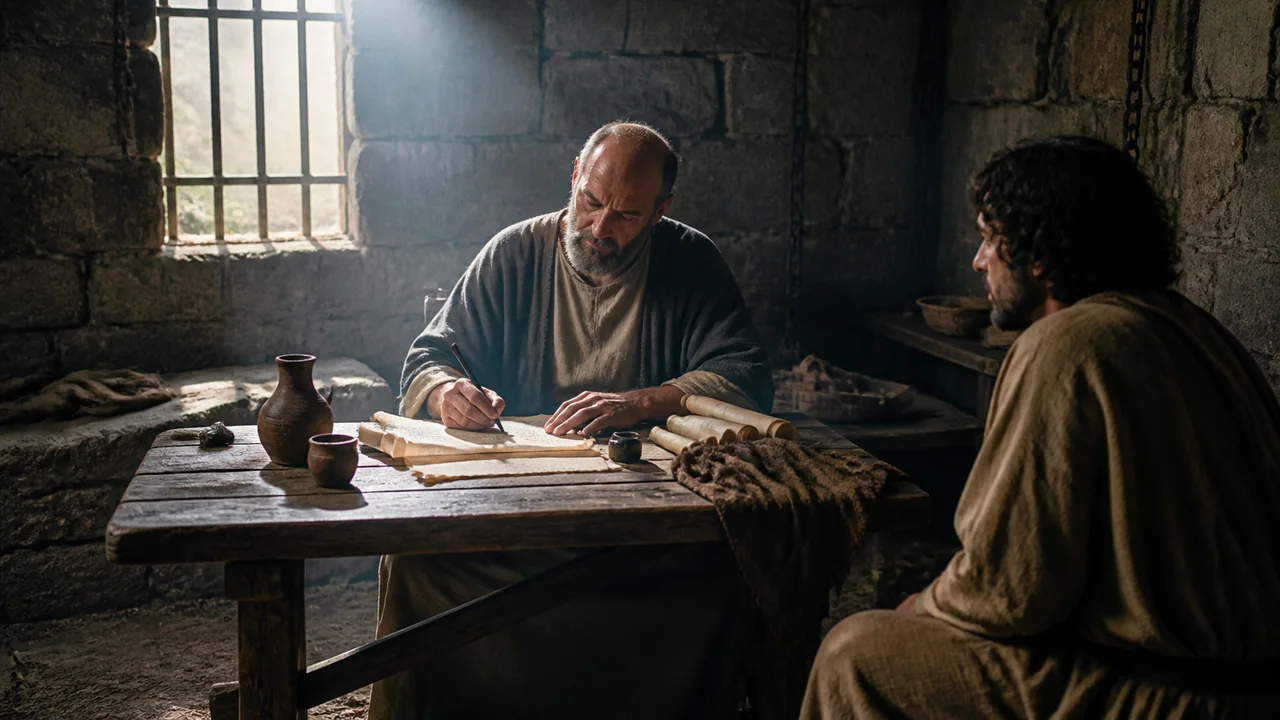
Philippians 4:6–7 invites believers to bring every concern to God through prayer, petition, and thanksgiving. It promises that God’s peace will guard hearts and minds in Christ Jesus. The passage does not shame people for anxious symptoms or promise the immediate removal of every problem. Its setting is a church under pressure learning to stand firm together.
The setting of Philippians
Paul wrote Philippians while imprisoned, though scholars debate whether the prison was in Rome, Ephesus, or Caesarea. The traditional Roman setting is common, but the letter itself does not name the city.
Philippi was a Roman colony in Macedonia. Acts 16 records the beginning of the church through people including Lydia, a formerly enslaved girl, and a jailer. Paul and Silas were beaten and imprisoned there.
Years later, the Philippian church supported Paul financially and sent Epaphroditus to care for him. The letter thanks them, reports his circumstances, calls for unity, and centers life on Jesus’ humble self-giving.
Paul’s language of joy therefore comes from confinement and uncertainty, not comfort. This context prevents us from reading his words as advice from someone untouched by trouble.
“Stand firm in the Lord” — Philippians 4:1
Chapter four begins with relationship: “Therefore, my brothers, beloved and longed for, my joy and crown, stand firm in the Lord.” The “therefore” looks back to chapter three, where Paul says believers’ citizenship is in heaven and they await Christ.
Standing firm is communal. Paul addresses people he loves, not isolated individuals expected to manage every burden alone. Christian endurance includes belonging to a church that can pray, give, correct, and carry needs.
The phrase “in the Lord” identifies the ground of stability. They do not stand firm through personality or denial but through union with Christ.
Conflict between Euodia and Syntyche — Philippians 4:2–3
Paul appeals to Euodia and Syntyche “to think the same way in the Lord.” These women had struggled beside Paul in the work of the gospel, yet a disagreement now affected the community.
Paul does not publicly describe the issue or portray either woman as the villain. He asks a trusted coworker to help them. Peace in the verses that follow is therefore connected with real relationships and practical peacemaking.
“The same mind” does not require identical opinions on everything. Throughout Philippians, it points toward the humble, Christ-shaped posture described in chapter two.
Sometimes anxiety is intensified by unresolved conflict. Prayer matters, and so may a conversation, apology, boundary, or wise mediator.
Rejoice and remember the Lord is near — Philippians 4:4–5
“Rejoice in the Lord always! Again I will say, ‘Rejoice!’” Paul does not command delight in imprisonment, illness, injustice, or grief. The object of joy is “the Lord.”
Christian joy can coexist with tears. Earlier Paul speaks of sorrow upon sorrow and warns the church with weeping. Joy is confidence in Christ’s goodness and future, not emotional cheerfulness at every moment.
Paul then calls for gentleness or gracious reasonableness to be known to everyone. “The Lord is at hand” may emphasize Christ’s nearness, His coming, or both. Either way, the church’s response is shaped by the reality that Jesus is not absent.
“In nothing be anxious” — Philippians 4:6
The Greek verb translated “be anxious” can refer to worry or consuming care. Paul is not giving a medical diagnosis or accusing everyone who experiences anxiety of deliberate sin. Elsewhere he uses related language for genuine concern for churches and people.
The contrast is not between caring and not caring. It is between being consumed by anxiety and bringing “everything” to God.
The command may feel impossible if detached from the invitation that follows. Paul does not merely say “stop.” He gives worry a direction: prayer.
Readers should not use this verse to tell a distressed person that symptoms prove weak faith. Prayerful support, medical assessment, counseling, rest, and practical change can belong together.
Prayer, petition, and thanksgiving
Paul uses several overlapping words. Prayer is broad approach to God. Petition or supplication emphasizes specific requests. Thanksgiving remembers God’s grace while asking for help.
“In everything” means no concern is too small or too complicated to bring. A vague cloud of anxiety can become a request: “Give me wisdom for the appointment.” “Provide work.” “Help me tell the truth.” “Protect this person and show me what responsible action I can take.”
Thanksgiving does not mean calling the crisis good. It keeps prayer rooted in relationship with the God who has already acted in Christ. Paul himself thanks God while acknowledging hardship.
The verse does not promise that asking with the correct formula guarantees the preferred answer. It teaches dependent conversation with God.
The peace of God as a guard — Philippians 4:7
God’s peace “surpasses all understanding” and “will guard your hearts and your thoughts in Christ Jesus.” The verb “guard” was used for protective military activity, an image that would resonate in a Roman colony.
The heart and mind represent inner life—desire, thought, will, and emotion. Peace stands watch, not because circumstances have become predictable, but “in Christ Jesus.”
The phrase “surpasses understanding” does not praise irrationality. It means God’s peace exceeds what circumstances alone could explain and what human planning can manufacture.
Paul does not state that every person will feel instant calm after one prayer. The promise belongs within persevering life with God and community. Peace can arrive as steady endurance, enough clarity for the next step, or the ability to rest while an answer remains unknown.
Thinking about what is true — Philippians 4:8
Paul continues with attention: whatever is true, honorable, just, pure, lovely, commendable, excellent, and worthy of praise should shape thought.
This is not positive thinking that denies danger. “True” comes first. Anxiety often turns a possibility into a certainty. A truthful practice distinguishes facts from predictions and identifies what action is possible.
The list also expands attention beyond the threat. There may still be justice, beauty, kindness, and evidence of grace to notice. Directing attention is not the same as suppressing unwanted thoughts. It is repeatedly returning to what deserves sustained consideration.
Practice, not information alone — Philippians 4:9
Paul tells the church to practice what they learned, received, heard, and saw in him. Christian peace is connected with a formed way of life.
Prayer may lead to making peace with another believer, acting gently, remembering Christ’s nearness, seeking help, and choosing truthful attention. The “God of peace” is with people as they practice.
This keeps the passage from becoming a private technique. Paul addresses a community with conflict, mission, generosity, and shared examples.
Applying the passage responsibly
Begin by naming the specific concern. Identify any responsible step, such as requesting information, seeking medical care, speaking with someone, or setting a boundary. Bring both need and action to God.
Remember one concrete grace without denying pain. Then choose one true statement to revisit when predictions multiply.
Share the burden. Philippians is a letter about partnership, and chapter four itself calls for mediation and help. Isolation is not the goal.
If anxiety persists, disrupts ordinary life, or includes panic or thoughts of self-harm, seek qualified help. In an immediate crisis, contact emergency or crisis support in your country. This does not reject Philippians 4; it can be part of practicing truth and receiving God’s care through people.
Questions for personal or group study
- How does Paul’s imprisonment affect the way you hear his command to rejoice?
- Why does the conflict in verses 2–3 matter for the discussion of peace?
- What is the difference between a general worry and a specific petition?
- What does the military image of peace “guarding” suggest?
- How can verse 8 be practiced without denying reality?
Summary
Philippians 4:6–7 belongs to a larger call to stand firm, pursue reconciliation, rejoice in Christ, act gently, pray specifically, think truthfully, and practice what the gospel teaches.
The passage does not promise a problem-free life or condemn people who need care. It invites anxious people into the presence of a near Lord and a community of help. God’s peace is not built from control. It guards life in Christ while believers pray and walk through what remains unresolved.
Frequently asked questions
Does Philippians 4 say anxiety is always sinful?
It calls believers away from consuming worry toward prayer, but it does not analyze every medical or psychological cause. The verse should not be used to shame people experiencing anxiety disorders.
What does “with thanksgiving” mean during suffering?
It means remembering God’s character and grace while honestly presenting the need. It does not require thanking God for evil or pretending suffering is pleasant.
What is the peace that surpasses understanding?
It is peace given by God and grounded in Christ, greater than what circumstances or human planning can produce. Paul describes its protective work rather than promising one identical feeling for everyone.