Studying the Bible in context means understanding what a passage communicates within its paragraph, book, historical setting, literary form, and place in the whole biblical story before deciding what it means for us today.
Context does not make Scripture cold or inaccessible. It helps us listen more carefully. The goal is not to collect background facts for their own sake but to hear the text faithfully and respond to God’s Word.
Why context matters
Every biblical passage belongs somewhere. A sentence is part of a paragraph. A paragraph serves the purpose of a book. The book was written or compiled in a real setting and uses a particular kind of literature.
When we remove a verse from those relationships, we can make it say something its author was not saying. We may turn description into command, a lament into a promise of comfort, or a word to ancient Israel into a guarantee about a private plan.
Reading in context protects us from using Scripture merely to confirm what we already think. It also reveals richer meaning. Philippians 4 becomes more powerful, not less, when we learn that Paul spoke about joy and peace from imprisonment.
Begin with observation
Before asking, “What does this mean to me?” ask, “What does the passage say?” Read it more than once, preferably in a clear translation. If possible, compare one or two other trustworthy translations.
Notice repeated words, contrasts, commands, questions, reasons, and changes in speaker. Identify the people and places. Mark connecting words such as “therefore,” “but,” “for,” and “so that.” These show the flow of thought.
Write observations before consulting notes. You do not need special vocabulary. “Paul repeats the word grace” or “the disciples misunderstand Jesus” are useful observations.
Do not rush to find a hidden meaning. Most passages communicate through their visible words and structure.
Read the paragraphs around the verse
The quickest context check is to read before and after. A verse number is a navigation tool added centuries after the biblical books were written; it does not make each verse an independent unit.
Consider Jeremiah 29:11: “For I know the thoughts that I think toward you… thoughts of peace, and not of evil.” Read alone, it is often treated as a personal promise that any current plan will succeed. The surrounding letter addresses Jewish exiles in Babylon, tells them to build lives there, and promises national restoration after seventy years.
The verse still reveals God’s faithfulness and gives hope, but context changes the application. It does not guarantee that every individual plan will unfold quickly or comfortably.
As a basic habit, read the whole chapter. Better still, identify the full paragraph or scene, which may cross chapter boundaries.
Ask what kind of writing you are reading
The Bible is a library, not one flat type of book. It contains narrative, law, poetry, wisdom, prophecy, Gospel, letters, apocalyptic visions, genealogies, and more.
Historical narrative tells what happened but does not automatically command readers to repeat every action. Poetry uses images and parallel lines; “the trees clap their hands” is not a botanical claim. Proverbs state wise patterns, not exceptionless guarantees. Letters present arguments that must be followed across paragraphs. Apocalyptic writing uses vivid symbols to reveal spiritual realities and hope.
Genre—the kind of writing—guides expectations. We read a psalm differently from a legal instruction and Revelation differently from Acts.
This is ordinary reading wisdom. You already interpret a text message, recipe, contract, and song differently because you recognize their forms.
Learn the historical situation
Ask who wrote, to whom, when, where, and why. Not every question can be answered with certainty, and responsible study should say when evidence is debated.
A good study Bible, Bible dictionary, or book introduction can help. Use sources that explain their reasoning and distinguish fact from tradition.
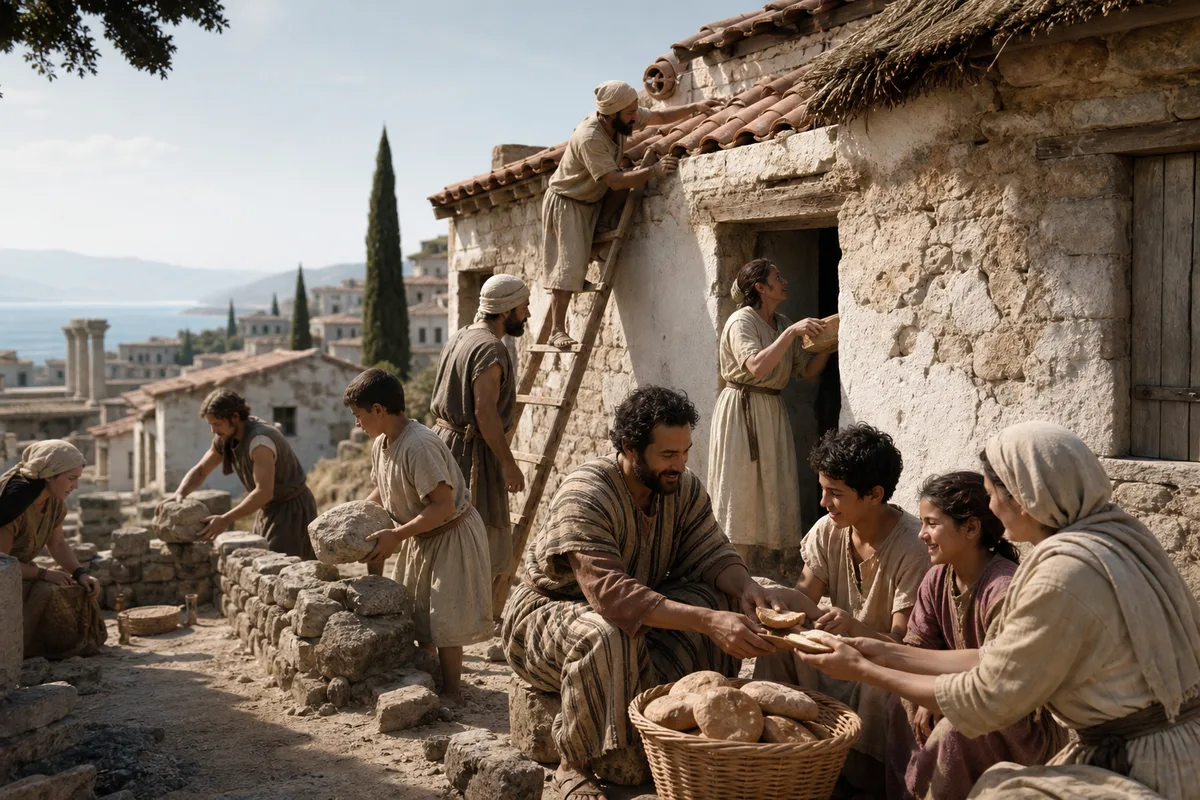
Historical information is useful when it clarifies the text. Knowing that Philippi was a Roman colony illuminates language about citizenship. Understanding first-century honor and hospitality can clarify Gospel scenes.
Avoid the claim that a background detail “completely changes everything” when the detail is uncertain or absent from reliable sources. The text remains primary.
Follow the author’s purpose and argument
Books have aims. John says he wrote so readers may believe Jesus is the Christ and have life in His name. Luke explains that he investigated events to give an orderly account. Paul’s letters often address specific church problems while teaching the gospel.
Summarize the passage in one sentence, then ask how it contributes to the book’s purpose. In Romans, for example, “therefore” in chapter 12 connects Christian conduct with eleven chapters explaining God’s mercy.
Do not build a doctrine from one phrase while ignoring the author’s larger argument. Strong interpretation can show how the parts fit the whole.
Place the passage in the whole biblical story
The Bible tells a unified story of creation, human rebellion, God’s covenant promises, Israel, Jesus Christ, the church’s mission, and new creation.
Ask where the passage stands in that story. Commands given to Israel under the Mosaic covenant must be read in relation to Christ’s fulfillment and New Testament teaching. Sacrifices, priesthood, and temple point forward in ways the book of Hebrews explains.
This does not make the Old Testament disposable. It helps Christians read it as Scripture that reveals God, exposes sin, teaches wisdom, and prepares for Christ.
Luke 24 portrays Jesus explaining how Moses and the Prophets pointed toward His suffering and glory. Christ-centered reading should arise from the biblical storyline, not from forcing Jesus into every small detail as a secret symbol.
Distinguish meaning from application
Meaning asks what the passage communicates in context. Application asks how that truth should shape belief and life now. Applications can differ while remaining connected to the same meaning.
The good Samaritan teaches love of neighbor that crosses social boundaries. One reader may apply it by caring for an injured stranger; a church may examine how it treats an excluded group. Both applications grow from the story’s teaching.
An application is weak when it could be attached to any verse or contradicts the passage. Ask, “Can I show the path from these words to this response?”
Include belief, character, worship, relationships, and action. Application is more than finding a task; sometimes the faithful response is receiving comfort or correcting a false idea about God.
Use word studies carefully
Biblical words were written in Hebrew, Aramaic, and Greek. Original-language tools can help, but they can also create confident mistakes.
A word can have several possible meanings, but it does not carry all of them in every sentence. Context selects the sense, just as the English word “bank” means something different beside a river and in a financial discussion.
Do not choose the most interesting dictionary definition merely because it supports your idea. Compare how the word functions in the passage and book. Reliable commentaries can help readers without language training.
Translations produced by teams already reflect substantial language study. You can study faithfully without knowing Greek or Hebrew.
Recognize interpretation and uncertainty
Christians agree on many central teachings and disagree on some passages. When serious, historic interpretations exist, name them fairly rather than presenting one as the only possible reading.
Ask which view best explains the words, context, genre, and whole-book argument. Avoid deciding solely by what feels preferable.
Humility is not saying no conclusion is possible. It is matching confidence to evidence. Say “the text clearly states” when it does, “this likely means” when evidence is strong but not decisive, and “we do not know” when Scripture is silent.
A simple study process
- Pray for humility and attention. Ask God to correct you, not only confirm you.
- Read the full unit several times. Include surrounding paragraphs.
- Observe. Note repeated words, structure, speakers, commands, and questions.
- Identify genre and situation. Use trustworthy reference material where needed.
- Summarize the main point. Try one clear sentence.
- Connect it to the book and biblical story. Ask how it relates to Christ and the gospel without forcing a connection.
- Check your reading. Compare translations and reliable commentaries; listen to the church rather than assuming you are the first to understand.
- Apply the actual message. Choose a response that grows from the text.
This process can take ten minutes for a short devotional reading or several sessions for a difficult passage. Depth is not measured only by time.
A worked example: Philippians 4:13
“I can do all things through Christ, who strengthens me” is often used for achieving any personal goal.
Read verses 10–20. Paul thanks the Philippians for support and explains that he has learned contentment when well-fed and hungry, in abundance and need. “All things” refers to enduring these changing circumstances faithfully through Christ’s strength.
The contextual meaning is not smaller than limitless achievement. It is more durable: Christ strengthens His servant to remain faithful in both lack and abundance.
An application may be asking for strength to endure financial uncertainty without despair or to receive abundance without pride.
Questions for personal or group study
- What changes when you read your chosen verse within the whole paragraph?
- What genre is the book, and what expectations does that create?
- Which historical facts genuinely clarify the text?
- How does the passage fit the book’s purpose and the biblical story?
- Can you explain how your application grows from the passage?
Summary
Contextual study listens before applying. It reads the surrounding words, respects literary form, learns relevant history, follows the author’s purpose, and locates the passage in Scripture’s whole story.
This discipline does not replace prayer or obedience. It serves them. The better we understand what Scripture says, the more faithfully we can trust, worship, and live its message.
Frequently asked questions
Do I need academic training to read in context?
No. Begin by reading the whole paragraph and book, noticing structure, and using a reliable study Bible. Advanced tools can help, but careful ordinary reading matters greatly.
Which Bible translation should I use?
Use a clear, trustworthy translation and compare another when wording is difficult. No translation removes the need for context.
Can the Holy Spirit give a personal meaning different from the text?
The Spirit may apply Scripture personally, but He does not make the passage mean the opposite of what it communicates. Personal impressions should be tested by the text and sound wisdom.